SAP Business Technology Platform (SAP BTP) is SAP’s unified innovation platform, combining application development, automation, integration, artificial intelligence, and data and analytics capabilities in a single environment. It enables organisations to extend their SAP core, connect disparate systems, build custom applications, and embed intelligence into business processes, without modifying the ERP itself. It runs across major hyperscalers including Microsoft Azure, AWS, and Google Cloud, and is available in cloud, on-premise, and hybrid configurations.
SAP BTP has come a long way in the past year alone, let alone since its conception back in 2021, when it was originally launched. With more services added, a strong focus on AI, and continued investment in tools for developers and business users alike, it has quickly been shifted to a central element of the SAP ecosystem.
We have seen first-hand an increase in organisations under pressure to modernise, innovate and do more with less. This means SAP BTP is playing a bigger role than ever. But with constant updates and so many moving parts, it can be hard to keep up, let alone know where to start.
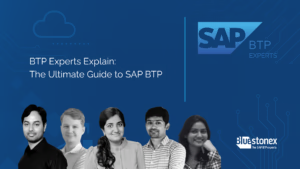
That’s why myself (Aditi, Process Automation Lead) and the other senior BTP Experts—Vik (SAP BTP DevOps & AI Manager), Jacob (SAP BTP Consultant), Soumya (SAP BTP Development Manager) and Sab (SAP BTP Integrations Manager) have teamed up to co-write this guide. Here we cover what SAP BTP’s capabilities include, how it has evolved following the Sapphire 2026 announcements, how organisations are using it in practice, and what you need to know about licensing, deployment, and getting started.
What is SAP BTP?
SAP BTP is best understood as the innovation and integration layer that sits alongside and above SAP’s core business applications. Where SAP S/4HANA, SuccessFactors, Ariba, and other applications handle the transactional backbone of an enterprise, BTP is the platform on which those applications are extended, connected, analysed, and increasingly automated.
The platform addresses four fundamental enterprise needs. First, integration: connecting SAP and non-SAP systems so that data flows consistently across the organisation rather than being trapped in application silos. Second, extension: building custom applications and additional logic on top of standard SAP software without modifying the underlying code, a concept known as clean core. Third, intelligence: embedding AI, machine learning, and predictive analytics directly into business processes rather than bolting them on as separate tools. Fourth, development: giving both professional developers and business users the tools to build, automate, and deploy applications faster than traditional approaches allow.
What distinguishes BTP from a general cloud platform is its depth of integration with the SAP ecosystem. The pre-built integrations, the understanding of SAP data models, the embedded Joule AI layer, and the alignment with SAP’s clean core strategy are all specific to BTP in ways that hyperscaler platforms cannot replicate.
What Makes Up SAP BTP? The Five Pillars
BTP is structured across five capability pillars, each addressing a distinct dimension of enterprise technology need. In 2026, SAP has begun consolidating some descriptions into four pillars in certain partner materials, particularly merging Application Development and Automation into a single category, and has elevated AI to the primary strategic lens for the whole platform. The five-pillar framework below remains the most widely used and the most useful map of what BTP contains.
A note on the evolving structure: since Sapphire 2026, SAP has announced the SAP Business AI Platform as a broader architecture that incorporates BTP, SAP Business Data Cloud, and AI Foundation. This is covered in detail in the section below. The five pillars and all the capabilities within them remain unchanged: what has shifted is the strategic frame around them.
1. Application Development and Extensibility
The application development pillar gives organisations the tools to build custom business applications and extend standard SAP software without touching the core ERP code. It covers professional developer tooling through SAP Cloud Application Programming Model (CAP) and SAP Business Application Studio, low-code and no-code development through SAP Build, the SAP Fiori design system for consistent, role-based user interfaces, and content management services.
The commercial case for this pillar is the reduction in custom development time and technical debt. IDC research commissioned by SAP found that organisations using BTP alongside core SAP applications achieved 164% more application extensions and 46% higher development team productivity compared to those without BTP. Application development on BTP can be up to three times faster than traditional approaches, according to SAP benchmarking.
2. Automation
The automation pillar covers the tools for reducing manual effort in business processes through both rule-based and intelligent automation. SAP Build Process Automation provides a low-code environment for building workflows and approval processes accessible to business users without developer involvement. SAP Signavio provides process mining and analysis capabilities that map how processes are actually executing in the system, identifying bottlenecks and inefficiencies before automation is applied. Robotic Process Automation (RPA) handles repetitive, rules-based tasks that interact with system interfaces directly, useful for legacy system integration where API-based approaches are not available.
The automation pillar works in close combination with the AI pillar, particularly as Joule agents increasingly handle multi-step process execution. The boundary between automation and agentic AI is the most actively evolving area of BTP in 2026.
3. Integration
The integration pillar, primarily delivered through SAP Integration Suite, addresses the fundamental challenge of connecting SAP and non-SAP systems so that data and processes flow consistently across the enterprise. SAP Integration Suite provides more than 3,400 prebuilt integration flows (iFlows) covering standard integration patterns between SAP applications and common third-party platforms. More than 170 Open Connectors are available for non-SAP applications. API management enables custom integrations and provides governance over API usage. Event-driven architecture capabilities support real-time data synchronisation across cloud and on-premise environments.
For organisations replacing SAP Process Integration or SAP Process Orchestration (PI/PO) as part of an S/4HANA move or a cloud transition, SAP Integration Suite is the strategic successor. It is also increasingly used to connect the SAP core to BTP extensions, third-party AI services, and SAP Business Data Cloud.
4. Data and Analytics
The data and analytics pillar provides the tools for managing, connecting, and analysing data across the enterprise. SAP Datasphere delivers a unified data environment that connects data from SAP and non-SAP sources without requiring it to be moved or duplicated, enabling real-time access to business-ready data across the landscape. SAP Analytics Cloud (SAC) sits above Datasphere, providing business intelligence, advanced analytics, and financial planning capabilities with AI-assisted forecasting and recommendations.
In 2026, the data pillar has gained new significance through the introduction of SAP Business Data Cloud and the SAP Knowledge Graph. BDC, co-developed with Databricks, creates a unified data foundation across the SAP landscape. The Knowledge Graph encodes the semantic relationships between business entities, processes, and data objects across 452,000 ABAP tables and 7.3 million data fields, giving AI agents the contextual understanding they need to reason correctly over enterprise data rather than operating on raw, isolated records.
5. Artificial Intelligence
The AI pillar has undergone the most significant evolution of any BTP capability since the platform’s original launch. When first described, it covered pretrained AI models, the Generative AI Hub for accessing large language models from providers including Anthropic, Google, and OpenAI, and SAP AI Core as the underlying infrastructure for running AI workloads.
In 2026, the AI pillar is better understood as the foundation for the autonomous enterprise. The central figure is Joule, which has evolved from a generative AI assistant introduced in 2023 into a full agentic AI platform capable of planning and executing multi-step business processes across the SAP landscape without requiring human input at every stage. SAP now ships more than 40 specialised AI agents and over 2,400 Joule Skills covering processes across finance, procurement, supply chain, HR, and customer engagement.
Underlying the reliability of those agents is the SAP Knowledge Graph, and supporting their development is Joule Studio, a development environment for building custom AI agents and Joule Skills that became generally available in Q1 2026. At Sapphire 2026, SAP announced Joule Work: a new human interface designed to eventually replace traditional SAP application navigation, allowing users to express intent in natural language and have AI agents orchestrate the required processes and applications in response.
With five pillars and hundreds of services, the hardest part of BTP is usually deciding where to start. That depends on your processes, your licences and the problems your people face every day. Our BTP discovery workshop maps what’s possible on BTP for your business before any build begins, and gives you a shortlist of use cases to pursue first.
The SAP Business AI Platform: What Sapphire 2026 Changed
If you have been following SAP announcements since May 2026, you will have seen the term SAP Business AI Platform appear alongside or in place of SAP BTP. Here is what it means and how it affects you as a customer or prospect.
At SAP Sapphire 2026 in Orlando, SAP announced the consolidation of three previously distinct platform investments into a single unified architecture: SAP Business Technology Platform, SAP Business Data Cloud, and SAP’s AI Foundation layer. Together, these form the SAP Business AI Platform. SAP CEO Christian Klein described the vision as “the Autonomous Enterprise, where agents run the business and you can focus on what truly matters.”
For existing BTP customers, this announcement does not require immediate action. The platform, services, licensing models, and capabilities described in this guide remain unchanged. BTP is still BTP. What the announcement signals is the strategic direction: SAP is repositioning the entire platform as an AI platform, with BTP providing the development, integration, and automation foundation, BDC providing the unified data layer including the Knowledge Graph, and AI Foundation providing the model management and Joule infrastructure that sits above both.
The practical implications arrive in stages:
Partner credentials: Effective June 30, 2026, SAP renamed the SAP Business Technology Platform partner competency to the SAP Business AI Platform competency. Partners holding BTP accreditation, including Bluestonex, now hold BAIP accreditation. If you are working with a partner and their credentials matter to you, look for the BAIP competency rather than the older BTP label.
Licensing: A third consumption pool, AI Units, joins BTP Capacity Units and BDC Credits as the metric for Joule agent usage, Joule Studio workloads, and AI Foundation services. Organisations activating agentic AI capabilities should understand which consumption pool they are drawing from before their next renewal cycle.
RISE and GROW customers: RISE with SAP customers receive a contractual commitment to activate at least three Joule Assistants in year one. GROW with SAP customers get access to more than 20 AI assistants from day one. Both programmes now include an AI activation commitment that was not present in earlier versions of the contracts.
BTP and Clean Core: Why They Belong Together
Clean core is one of the most important concepts for any organisation running SAP, and BTP is the mechanism through which it is achieved.
A clean core means keeping the standard SAP application code unmodified. Instead of building custom ABAP directly in the ERP, custom logic, integrations, and applications are built as extensions on BTP using SAP-provided public APIs and extension points. When SAP releases an update to S/4HANA, a clean core organisation applies it without months of remediation work to fix broken custom code. A heavily modified core means every upgrade is a project in its own right.
The commercial case for clean core is most visible in the context of S/4HANA migration and AI readiness. Organisations migrating from SAP ECC with heavily customised cores face a much longer and more expensive transition than those with cleaner landscapes, because the customisations need to be assessed, replicated in a BTP-compatible way, or retired before the migration can proceed. The same dynamic applies to AI: Joule agents operate on standard SAP processes and standard SAP data models. Custom code that diverges from those standards creates AI blindspots where agents cannot operate safely.
BTP is not just the platform for building extensions. It is the platform that makes clean core practically achievable for organisations that need custom functionality. The choice is not between clean core and capability. It is between capability built in a way that stays current and capability built in a way that accumulates technical debt with every update.
SAP BTP Use Cases: What Organisations Are Building
The five pillars describe what BTP contains. Use cases describe what organisations are actually doing with it.
Integration Suite Use Case: Integrating a third-party insurance provider
Watches of Switzerland needed to integrate Zillion, a third-party insurance provider, into both their POS and ECC systems — and they needed it live in just two weeks. Using SAP Integration Suite and Bluestonex’s Integration Services, the team rapidly deployed, configured, and mapped interfaces without disrupting business. The result? Seamless, scalable integration that lets Watches of Switzerland protect $330,000 worth of purchases on day 1 alone.
Automation Use Case: Warehouse Process Automation on SAP BTP
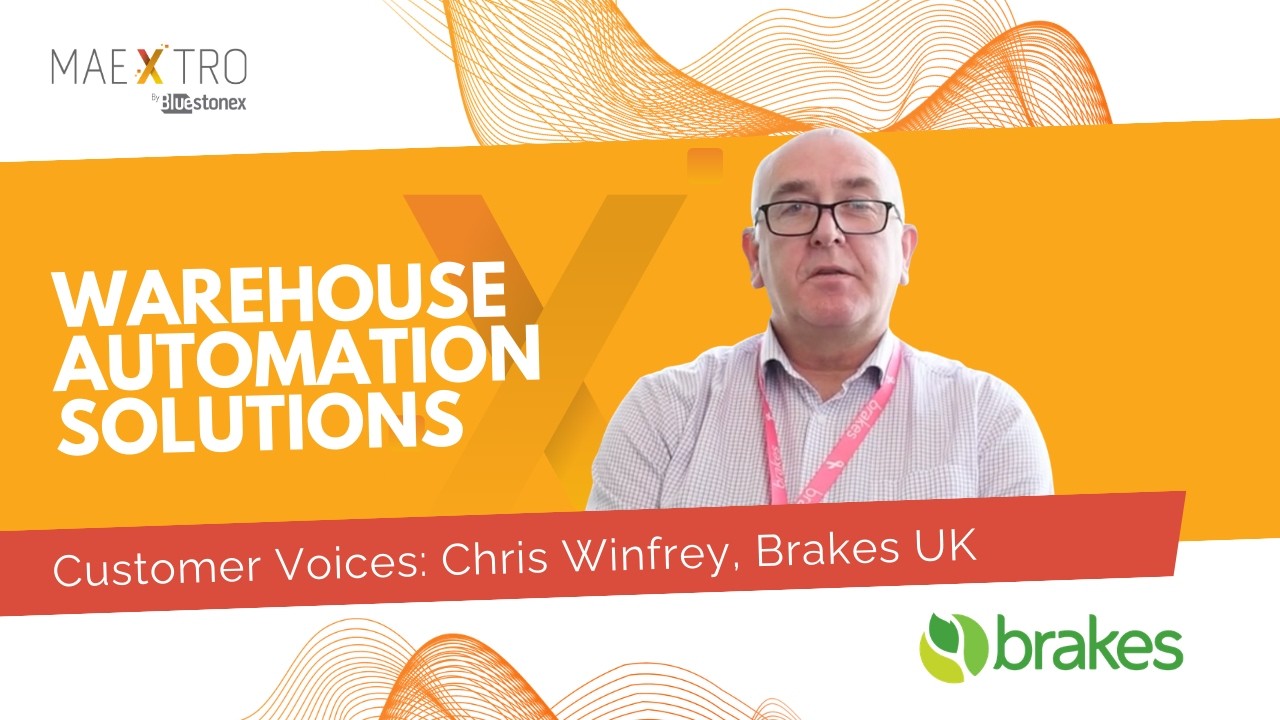
To improve user experience and reduce manual effort in its distribution centres, Brakes UK used SAP BTP and a human-centred design approach to develop custom SAPUI5 applications. These apps automated critical logistics processes, reduced dependency on skilled SAP users, and improved employee satisfaction. The entire solution — from design thinking to rollout — was built on BTP using Bluestonex’s Maextro framework, transforming outdated workflows into sleek, efficient operations.
Application Development Case: Improving Sales Processes
Autoglass Ireland transformed its manual, outsourced sales process by adopting SAP BTP and a custom product ordering app. Built using Bluestonex’s accelerator and deployed on SAP BTP, the new app enabled depot managers to search and order products independently, reducing the need for FTEs and improving turnaround times. With branding, user roles, and order history tailored to their business, Autoglass now runs a faster, leaner sales process with no increase in headcount.
Organisations handling high volumes of support tickets often struggle with delays, misrouting, and inconsistent resolutions. By using SAP BTP’s Generative AI and AI Core services, businesses can automate ticket classification, extract intent, and suggest resolutions in real time. Integrated with SAP systems, this reduces triage effort, improves response times, and increases first-time fix rates — all without replacing existing support platforms.
Use SAP BTP to embed AI into operational processes and unlock efficiency with context-aware automation.
Data Case: Real-Time Data Visibility for Better Decision-Making
Siloed data across SAP and non-SAP systems limits business insight and agility. With SAP BTP’s data and analytics services — including SAP Datasphere and SAP Analytics Cloud — businesses can unify data into a single, trusted layer and deliver real-time dashboards to decision-makers. From operational metrics to strategic KPIs, users get the right data, at the right time, with full lineage and governance.
Use SAP BTP to connect, cleanse, and analyse your data — and turn insight into action faster.
Across manufacturing and distribution, SAP BTP has become a platform for operational monitoring and application tracking at scale. Princes Foods, Carlsberg, and Brakes deploy BTP-based application tracking to monitor technology investment and improve lean management across food and beverage manufacturing. The BBC uses BTP-based application tracking to ensure licence fee investment in technology delivers measurable, auditable adoption. These use cases share a common thread: SAP BTP being used not just to build and automate, but to gain visibility into what has already been built and how it is actually being used.
Application monitoring and consumption visibility
With BTP consumption spread across cloud credits, licences, and service-specific metrics, monitoring has become a dedicated BTP use case in its own right. Organisations managing large BTP footprints across multiple subaccounts and applications need consolidated visibility that the native SAP Cockpit does not provide. Princes Foods, Carlsberg, and Brakes use BTP-based application tracking to monitor technology investment and support lean management across their manufacturing estates. The BBC uses the same approach to demonstrate that licence fee investment in technology is producing measurable adoption
Is SAP BTP Suitable for Small Businesses?
Yes, SAP BTP is absolutely suitable for small businesses, even if they do not currently run SAP workloads on BTP. In fact, many smaller organisations prefer it for its modular pricing, scalable architecture, and ease of integration with both SAP and non-SAP systems.
While Microsoft’s Azure and Copilot are strong contenders, especially in the SME market, SAP BTP stands out with deeper business process integration, access to Joule (SAP’s generative AI), and native connectivity to core SAP data, offering unmatched value for businesses already invested in SAP.
And with pay-as-you-go options, you do not need a large upfront commitment to get started.
Getting Started with SAP BTP: Licensing and Deployment
Deployment options
BTP runs on SAP’s own data centres and on the three major hyperscalers: Microsoft Azure, Amazon Web Services, and Google Cloud Platform. Most customers choose a hyperscaler that aligns with their existing cloud strategy. SAP HANA Cloud, which underpins Datasphere and several other BTP services, runs on SAP-managed infrastructure on top of the hyperscaler of the customer’s choice. The deployment decision is mostly operational and commercial rather than functional: the BTP capabilities are consistent across deployment options.
Licensing models
BTP is available through four commercial models, each suited to different stages of adoption and scales of use.
Pay-As-You-Go (PAYG): Usage is billed monthly with no upfront commitment. Suitable for organisations evaluating BTP or running low-volume workloads. Provides access to the full service catalogue but at higher per-unit rates than subscription-based models.
Subscription: A fixed monthly fee for specific services at defined consumption levels. Provides price certainty for predictable workloads. Suitable for individual services or small BTP programmes where usage patterns are well understood.
BTP Enterprise Agreement (BTPEA): A consumption-based contract where pre-purchased cloud credits are drawn down as services are used. Provides the most flexibility for organisations running multiple BTP services with varying consumption patterns. Credits that expire unused at renewal are a common financial management challenge for BTPEA customers.
Premium Cloud Services (PMC): A fixed-price enterprise model offering predictable costs and dedicated technical support. Suited to large-scale BTP programmes with established consumption patterns and senior SAP relationships.
With the introduction of the SAP Business AI Platform, a third consumption pool joins the landscape alongside BTP Capacity Units. AI Units are the metric for Joule agent usage, Joule Studio development workloads, and AI Foundation services. SAP Business Data Cloud credits form the third pool. Organisations planning AI activation should confirm with their SAP account team which consumption pool applies to each planned service before committing.
Free tier and trial access
SAP offers two ways to access BTP without an initial commercial commitment.
The 90-day free trial provides a non-commercial sandbox environment with access to more than 30 trial-specific services across development, integration, analytics, and automation. The trial is valid for 90 days from activation and requires a login at least every 30 days to remain active.
The Free Tier Model is a production-ready commercial account that provides ongoing access to selected BTP services at no cost, with no expiry and no minimum spend. Free Tier includes more than 90 services with always-free plans and threshold-limited service plans, and allows seamless upgrade to paid tiers without losing work. For organisations wanting to prove BTP value before committing commercially, Free Tier is the more practical starting point than the trial.
Frequently Asked Questions
What is the difference between SAP BTP and SAP Cloud Platform?
SAP Cloud Platform was the former name for SAP BTP. SAP rebranded and significantly expanded the platform in 2021, consolidating multiple technology services under the SAP BTP name. If you are working with documentation that references SAP Cloud Platform, it is referring to the same platform now called SAP BTP.
What is the SAP Business AI Platform?
SAP announced the SAP Business AI Platform at Sapphire 2026 in Orlando. It is a unified architecture that brings together SAP BTP, SAP Business Data Cloud (BDC), and SAP’s AI Foundation layer under a single strategic framework. BTP, including all five pillars and their existing capabilities, is unchanged. The Business AI Platform is the broader architecture that now positions BTP as the innovation and integration foundation for the autonomous enterprise.
What is Joule in SAP BTP?
Joule is SAP’s AI system embedded across the SAP application and BTP landscape. Introduced as a generative AI assistant in 2023, Joule has evolved into an agentic AI platform capable of planning and executing multi-step business processes across SAP systems. SAP now ships more than 40 specialised AI agents and 2,400 Joule Skills. Joule Studio, generally available from Q1 2026, enables organisations to build custom Joule agents.
What is clean core in SAP?
Clean core means keeping SAP application code unmodified by building custom logic, integrations, and applications as extensions on SAP BTP using SAP-provided APIs and extension points rather than in the core ERP. A clean core makes upgrades faster and less expensive, simplifies S/4HANA migrations, and ensures AI agents can operate across standard SAP processes without being blocked by custom code that deviates from the standard model.
What is the difference between SAP BTP and RISE with SAP?
RISE with SAP is a bundled offering for migrating to S/4HANA Cloud that includes BTP as one of its components alongside S/4HANA, SAP Business Network Starter Pack, SAP Signavio Process Insights, and managed cloud infrastructure. BTP is the extensibility and integration layer within the RISE bundle. You can use BTP independently without RISE, and you can take RISE without necessarily using all of BTP’s capabilities. RISE customers from 2026 onwards have a contractual commitment to activate at least three Joule Assistants in year one.
Is SAP BTP free?
SAP BTP offers both a 90-day free trial (non-commercial, sandbox environment) and a Free Tier Model (production-ready commercial account with no expiry and access to more than 90 services at no cost within defined usage limits). Beyond free tier and trial, BTP is available through Pay-As-You-Go, subscription, enterprise agreement, and premium cloud services models.
How does SAP BTP compare to Azure or AWS?
SAP BTP and hyperscalers such as Azure and AWS serve different purposes and are not direct alternatives. BTP runs on Azure, AWS, and Google Cloud Platform: SAP’s services run on top of hyperscaler infrastructure. BTP provides SAP-specific capabilities including pre-built SAP integrations, the clean core extension model, Joule AI agents trained on SAP business processes, and integration with the SAP Knowledge Graph. These are not available on generic hyperscaler platforms. Most large organisations use both: BTP for SAP-specific workloads and a hyperscaler for general cloud infrastructure.
Turning Possibility into Progress with SAP BTP
SAP BTP has evolved into more than just a platform. It is a vast and powerful ecosystem that brings together technologies, services, and strategy under one roof. If you have made it this far, you likely already understand its potential.
Next Steps
If you are evaluating SAP BTP for your organisation, the most practical starting point is identifying which of the five pillars addresses your most pressing technology need: integration of a fragmented system landscape, extension of SAP functionality without touching the core, development of custom business applications, improvement of data quality and analytics, or activation of AI and automation.
Bluestonex is an accredited SAP Business AI Platform partner with a team of BTP specialists who have delivered BTP implementations across manufacturing, retail, distribution and beyond. If you want to talk through what BTP looks like for your specific environment, see our BTP services page.
Is your BTP spend actually delivering value, or quietly going to waste?
Most SAP customers are only using around 40% of what they've bought. Six quick questions tell you where you actually stand, and what to do next.
6 questions
Takes about 90 seconds
No email required to see your result
QUESTION 1 OF 6
YOUR RESULT
Where we'd start
Bluestonex customers we manage directly run at 90%+ BTP utilisation, against an average of around 40% across the wider market.
Figures as stated on this page, source to be confirmed before publish.
Send your results over to us and a specialist will get back to you personally.
We typically reply within one business day.
Contact a specialist
We typically reply within one business day.
Where to See Us Next
1 / 3
13 days to go
SBN SAP Conference
Nationaltheatret konferansesenter, Oslo
20 October 2026
Join us at the Annual SAP Conference, Oslo - hosted by the Norwegian SAP User Group. Two days of SAP insight, innovation and networking, Bluestonex is proud to sponsor and take part of.
Bluestones is joining ThinkLinkers three-day Data & AI ThinkLab for senior data and IT leaders, taking part in a panel discussion alongside interactive workshops, roundtables, Q&A and open networking with the wider data community.
Bluestonex is joining the SAP AI World Tour as it comes to the UK. The day brings together SAP leaders, industry experts, and peers to explore the new AI vision and reimagined Joule experience, with keynotes, exhibitor showcases, and sessions on the AI decisions businesses are facing right now.
Is your PI/PO environment actually a risk, or just old?
SAP's standard support for PI/PO ends in 2027. Six quick questions tell you where you actually stand, and what to do next.
6 questions
Takes about 90 seconds
No email required to see your result
QUESTION 1 OF 6
ASSESSMENT COMPLETE
Watches of Switzerland migrated a critical SAP integration in under two weeks with zero disruption, protecting over $330,000 of client purchases on day one alone.