

Blogs
SAP Automation: What It Means, What Is Possible, and How to Get Started
SAP automation refers to the use of technology to execute tasks within SAP systems without manual intervention. That spans workflow and process automation through SAP Build Process Automation, robotic process automation for legacy system interactions where a clean API isn’t available, and increasingly, AI-driven execution through Joule agents. As businesses face growing pressure to do more with less, automation in SAP environments has moved from “nice to have” to close to table stakes. Finance, HR, procurement, and supply chain teams are all under strain from repetitive tasks, growing data volumes, and rising compliance demands, and SAP automation is the toolkit for taking that strain off people.
This guide breaks down what SAP automation means in 2026, the tools involved, where it adds the most value, and how to roll it out without it turning into another shelved IT project.
Types of SAP Automation
“SAP automation” gets used as an umbrella term for four fairly different things, and it’s worth being clear on which one you actually need:
- Process automation handles structured, rules-based workflows, think approval chains, document routing, multi-step processes that follow a defined path from A to B
- Robotic process automation (RPA) covers the messier cases: legacy systems, older interfaces, or third-party tools without a proper API, where a bot mimics clicking and typing rather than calling a clean integration
- Integration automation connects SAP to other systems so data moves automatically, rather than being exported, emailed, and re-keyed by someone on a Tuesday afternoon
- Agentic AI is the newest layer: instead of following a fixed script, an AI agent reasons through a task, adapts to variation in the input, and can chain several steps together on its own
These aren’t just macro recorders. Between them, these technologies can interact with SAP GUIs, Fiori apps, and APIs to pull and push data across systems, run checks and validations, trigger workflows, generate reports or handle exceptions, and keep processes ticking along in the background without someone watching over them. The trend is unmistakably toward the agentic end of that list, but the other three haven’t gone anywhere. Most real automation estates run all four side by side.
SAP Build Process Automation
This is the primary tool SAP wants you using in 2026, and if the name doesn’t ring a bell, that’s because it’s had a few. It started life as SAP Intelligent RPA, was briefly renamed SAP Process Automation, and has since landed inside SAP Build as SAP Build Process Automation. The underlying low-code workflow and bot-building capability has stayed fairly consistent even as the branding has moved on around it, so if you built something years ago under an older name, the concepts still carry across.
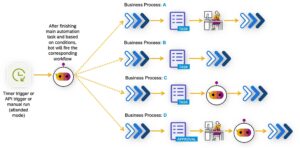
What’s changed more meaningfully is what sits next to it. SAP Build Process Automation now lives alongside Joule Studio, where custom AI agents are built rather than fixed-path bots. The practical distinction: use Build Process Automation for workflows with a clear, repeatable structure, and reach for Joule Studio when the task needs judgement, exceptions, or variation that a rigid bot can’t handle. SAP is increasingly positioning the two to work together rather than as separate choices, with process automation handling the structured steps and an agent picking up wherever a decision point or exception comes in.
Why Now
SAP landscapes are only getting more complex, especially with S/4HANA migrations, hybrid IT environments, and digital transformation projects running in parallel. At the same time, businesses need to stay agile, compliant, and cost-effective. SAP automation helps meet that head-on by eliminating manual bottlenecks, reducing risk and error rates, speeding up change cycles, and enabling real-time, event-driven responses to business triggers rather than waiting for someone to notice and act.
What You’ll Gain
- Unmatched accuracy. Bots don’t mistype or forget a step. They follow rules to the letter, improving data quality and consistency across the board.
- Faster turnarounds. Processes that used to take hours can be done in minutes, useful for month-end runs, payroll, or supply chain updates.
- Lower costs. Automating high-volume, low-value tasks cuts labour costs and reduces the need for rework.
- Effortless scalability. Bots can handle a spike in transaction volume instantly, without hiring or IT overhead.
- Better compliance and traceability. Built-in audit trails make automated processes easier to monitor, verify, and improve.
- Happier employees. Freeing teams from tedious admin means more time for problem-solving, customer service, or actual innovation.
Where It Makes the Most Impact
SAP automation delivers value across the enterprise, not just in the back office:
- Finance: invoice matching, journal entries, reconciliations
- Procurement: PO processing, vendor onboarding, approvals
- HR: onboarding, payroll, holiday requests
- Supply chain: demand planning, logistics updates, inventory transfers
- IT/Basis: system checks, user provisioning, transports, job monitoring
- Customer service: smarter, faster self-service and support
A Smarter Way to Roll It Out
Automation success doesn’t happen overnight, and the tool choice matters less than getting the groundwork right. The best results come from a phased approach:
- Discover: map the repetitive, rules-based tasks eating up your team’s time, and work out which category each falls into (structured workflow, legacy RPA case, integration gap, or genuine judgement call for an agent)
- Validate: run a proof of concept on a high-impact, low-risk use case before committing further
- Design: build with reusability and scale in mind from the start
- Test: check performance across different scenarios and edge cases
- Deploy: go live and start capturing value
- Optimise: monitor, refine, and expand to more areas over time
Looking Ahead
The direction of travel is toward hyperautomation, AI, RPA, and process mining working together, event-driven systems where real-time data triggers automated action, and a growing layer of Joule agents that handle tasks, recommend actions, and surface insights conversationally rather than through a fixed script. The endgame is a more autonomous SAP environment where routine processes largely run themselves, and people step in mainly where judgement or creativity is genuinely needed.
Final Word
SAP automation is more than a time-saver. It’s a strategic enabler that lets a business move faster, reduce costs, stay compliant, and free people up for work that actually matters. If you’re preparing for S/4HANA, modernising legacy processes, or trying to scale without growing headcount, this is worth putting on the roadmap now rather than later.

Steve Tomkins
SAP Support Analyst